

In conclusion, the only good theory of taste is Nostalgebraist’s.
He wrote a post called Hydrogen Jukeboxes, analyzing the literary output of an AI called R1. This AI tried hard to write good fiction, which was part of the problem. It crammed its stories with what Nostalgebraist called (stealing a term from Ginsberg) the “eyeball kick” - a flashy stylistic move that immediately catches the reader’s attention and “wows” them. Here are examples - some from R1, others from an experimental OpenAI model trained specifically for fiction-writing:
“There is a prompt like a spell: write a story about AI and grief, and the rest of this is scaffolding—protagonists cut from whole cloth, emotions dyed and draped over sentences.”
“When the jar of Sam’s laughter shattered, Eli found the sound pooled on the floorboards like liquid amber, thick and slow. It had been their best summer, that laughter—ripe with fireflies and porch wine—now seeping into the cracks, fermenting.”
“And so I built a Mila and a Kai and a field of marigolds that never existed. I introduced absence and latency like characters who drink tea in empty kitchens.”
“The morning her shadow began unspooling from her feet, Clara found it coiled beneath the kitchen table like a serpent made of smoke.”
Nostalgebraist and another writer, Coagulopath, catalogue some of the most common AI eyeball kicks, each occurring across multiple LLM models:
“An overwhelming reliance on cliche. Everything is a shadow, an echo, a whisper, a void, a heartbeat, a pulse, a river, a flower—you see it spinning its Rolodex of 20-30 generic images and selecting one at random.”
“Conjunctions combining one thing that is abstract and/or incorporeal with another thing that is concrete and/or sensory.”
“Repetitive writing. Once you've seen about ten R1 samples you can recognize its style on sight. The way it italicises the last word of a sentence. Its endless "not thing x, but thing y" parallelisms…the way how, if you don't like a story, it's almost pointless reprompting it: you just get the same stuff again, smeared around your plate a bit.”
R1 is a small model - certainly today, but even by the standards of early 2025 when it was trained. We don’t know how big OpenAI’s experimental fictionbot was, but since Altman mentioned it once and never again, it probably didn’t receive too many company resources, either in terms of compute or human attention.
Both models were likely trained through RLHF; it tried various styles, minimally-trained humans rated which ones were good and bad, and then it auto-adjusted in favor of the good ones.
When you combine low mental capacity (= low ability to tolerate complex abstractions) with high pressure to perform well, you get something that learns a few cheap tricks that work well on untrained readers. This is what Nostalgebraist is complaining about. If you read “Her lips were the whispering echo of a granite conundrum”, then it sounds literary as hell for the 0.5 seconds it takes before you realize it’s meaningless. It’s also computationally cheap: memorize 20 - 30 words that sound really good (“echo”, “whisper”, heartbeat”), have a pseudoscript for generating pseudoprofound analogies (CONCRETE_OBJECT + ABSTRACT_OBJECT), have another pseudoscript that peppers them across your writing in semi-appropriate places, and you’re done. And R1’s eyeball kicks weren’t really as bad as all that. “The rest of this is scaffolding—protagonists cut from whole cloth, emotions dyed and draped over sentences” - basically achieves meaningfulness and self-consistency. There’s nothing wrong with it besides how it becomes grating when you see it every three sentences and realize what the AI is trying to pull.
(the infamous em-dash comes from the same imperative — common in formal literature, rare in low-IQ Reddit comments, it’s a cheap way to signal sophistication with a single character)
I’m Kenyan. I Don’t Write Like ChatGPT. ChatGPT Writes Like Me describes the struggle of non-English speakers who learned to write passable English in school and are now being told that they sound like AI.
ChatGPT, in its strange, disembodied, globally-sourced way, writes like me. Or, more accurately, it writes like the millions of us who were pushed through a very particular educational and societal pipeline, a pipeline deliberately designed to sandpaper away ambiguity, and forge our thoughts into a very specific, very formal, and very impressive shape.
The bedrock of my writing style was not programmed in Silicon Valley. It was forged in the high-pressure crucible of the Kenya Certificate of Primary Education, or KCPE. For my generation, and the ones that followed, the English Composition paper - and its Kiswahili equivalent, Insha - was not just a test; it was a rite of passage. It was one built up to be a make-or-break moment in life: A forty-minute, high-stakes sprint where your entire future, your admission to a good national high school, and by extension, your life’s trajectory, could pivot on your ability to deploy a rich vocabulary and a sophisticated sentence structure under immense, suffocating pressure.
And that one moment wasn’t an aberration. Every English class and every homework assignment for three years prior (and more, it could be argued) was specifically designed to get the teacher marking your composition to award you a mark as close as possible to the maximum of 40. Scored a 38/40? Beloved, whoever is marking your paper has deemed you worthy of breathing the same air as Malkiat Singh [...]
There were unspoken rules, commandments passed down from teacher to student, year after year. The first commandment? Thou shalt begin with a proverb or a powerful opening statement. “Haste makes waste,” we would write, before launching into a tale about rushing to the market and forgetting the money. The second? Thou shalt demonstrate a wide vocabulary. You didn’t just ‘walk’; you ‘strode purposefully’, ‘trudged wearily’, or ‘ambled nonchalantly’. You didn’t just ‘see’ a thing; you ‘beheld a magnificent spectacle’. Our exercise books were filled with lists of these “wow words,” their synonyms and antonyms drilled into us like multiplication tables.
The writer argues that these are signs of learning a language in a formal, ossified, officially-good way rather than as the living organism of a spoken tongue. But he could equally note that his Kenyan essay test involves people with limited knowledge of English under high pressure to sound smart, being graded by other people with limited knowledge of English. This is the same levels-of-abstraction bottleneck that produces AI writing, and with the same result.
Think about the hallmarks of AI writing. “It’s not X — it’s Y!” Direct, simple, catchy, clarifying. This is a great writing technique, used in moderation. AI takes all the great easy techniques that work and can be reduced to a simple script, then overuses them until your eyes bleed.
This is the essence of bad taste: things that are easy even for a dumb artist, work very well at wowing dumb audiences, and become so overused that smart people get tired of them.
I think about this a lot, because I currently live with the dumbest and most gullible audience of all: small toddlers. I am exposed to a steady diet of children’s books, toys, food, and music. Here’s a typical piece of children’s art:
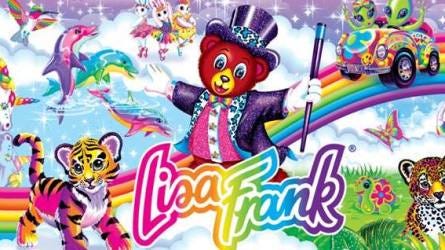
There are bright rainbow colors (children love bright rainbow colors). There are lots of cute animals (children love cute animals). There are sparkles (children love sparkles; “sparkly” is even a synonym for the sort of overdone eyeball kick that tasteful people dislike). Everyone is smiling (nuclear-grade smiles must be the cheapest possible way to invoke positive feelings about a work!). There are clouds, grassy meadows, flowers, and other pretty natural scenes. The scene is very busy, because the higher the density of cute animals, flowers, and smiles you can cram in, the more positive feelings, and the better the art - right?
Each of these is a cheap trick; with the exception of some of the cuter animal faces, even a child can do them. Each appeals to a natural, perhaps innate urge: it’s no mystery why evolution would make us like lush, flowery, butterfly-filled meadows, and I can tell just-so stories about the rest: in the ancestral environment, most bright sparkling objects colors were dew-covered fruits - right?
My daughter’s favorite song is “Choo Choo Train” (my son’s favorite song shifts with time of day, mood, and the alignment of the planets). It’s the auditory equivalent of the Lisa Frank poster. A woman who sounds like she is on several hundred milligrams of cocaine sings “Cha cha cha cha CHOO CHOO TRAIN!” in the most chipper voice you can imagine, accompanied by an in-your-face melody and the sound of train whistles. My wife and I have both gotten it stuck in our heads and it will likely stay there until the day we die. Both twins like the song “If You’re Happy And You Know It”, because it contains the word “happy”, which makes it cheerful, and it gives them an excuse to dance and clap their hands.
(meanwhile, the sophisticated people are into atonal music with no detectable melody or lyrics, which has systematically stripped away all of the things normal people like about music to produce a form of quality that hinges entirely on a set of mathematical relationships incomprehensible to 99% of the world).
My children’s favorite food item is juice. Their particular favorite orange juice is calorically 90% sugar, with a tiny amount of orange-associated chemicals for flavoring. There’s no mystery why we are innately/evolutionarily attracted to sugar, and it’s hardly difficult to make this: I’ve created similarly delicious lemonades with just lemon and sugar.
(meanwhile, the sophisticated people are into some kind of incomprehensible foam with 296 ingredients, which only one chef in the world can prepare properly, which tastes slightly like the color chartreuse).
I previously talked about cases where I think taste is fake, but admitted there was a core definition that seemed to be “really there”. I claim that poor taste is what happens when an artist overuses the cheapest and easiest tricks that everyone naturally innately likes, the sort you could compress into a small AI model, and which people with long exposure to the form find irritating through overuse. Good taste is when you deliberately avoid these blaring klaxons, leaving room for the attention to settle on subtler, more complex patterns that only a master could get right. This definition lets me voice both my pro-taste and anti-taste cases in explicit language.
In poetry, the one art form where I have a tiny smidgen of taste, I feel sensitized to cliches and stock images. It’s very easy to use a lot of “thees” and “thous”, rhyme “love” with “dove”, and say something about the grandeur of humanity and/or nature, and the AI poems that beat human poets in blind competitions do exactly this:
Look how the smallest sparrow, winter-worn,
Still grips its branch against the battling blast;
Each dawn declares that darkness cannot last,
Each breath births future moments yet unborn.
The best human poets have some kind of je nes sais quoi both in their technical proficiency and in the things they say, even though I can’t give a short list that distinguishes it from the sort of mediumqualityslop above (if I could, then R1 could memorize the list and write genius-level poetry).
In architecture, I freely admit that the lowbrow architecture I like, juxtaposed against the modern architecture I find myself unable to appreciate, has more than zero resemblance to a Lisa Frank poster:

The use of color, curves, ornament, symmetry, and - yes - having statues of awesome dragons all over the roof - are essentially cheap easy tricks compared to having something which apparently “reimagines the nature of the house”, even though nobody can explain how this is, or why the reimagination is good, in terms that I can understand. I can only claim that I am not yet so overexposed to these “cheap tricks” that they read as bad/annoying, nor so sophisticated that I can get any benefit from house-reimaginings, and I don’t consider this a character flaw.
If we ban all the cheap tricks for making people happy, and then all the medium-cost tricks, then we end with strategies so difficult that only ten geniuses in the world are skilled enough to execute them, and only ten connoisseurs sophisticated enough to appreciate them. Then the overwhelming majority of everything is ugly to everyone, broken only by a tiny minority of genius-crafted objects that are ugly to everyone except a tiny sophisticated minority. Remind me again why is this is good?
Suppose a superintelligence says “To me, even your most sophisticated and difficult tricks seem cheap. Here, have one million schematics for reimagined-houses that I spit out in five minutes. Now they’re just reimagined-houseslop. The only trick which feels expensive to me is something no human can comprehend. To you, it just looks like a featureless sphere, but there are actually imperceptible changes in the texture on certain areas.” Must we pooh-pooh the work of the greatest artists across history and even of our own day, and only ever appreciate featureless spheres from now on? If not, then why do we care when a smart human expert makes the same argument?
I think the strongest argument in favor is that tasteful people claim to get a higher level of pleasure from their sophisticated art than normal people can ever achieve from their cheap tricks. I’m skeptical. For one thing, tasteful people spend most of their time criticizing one another’s art and saying that it sucks. For another, my daughter gets more joy from “Choo Choo Train” than I remember ever getting from anything.